
Blog
Choosing the Right Lifting Equipment for Your Dorset Business: A Practical Guide
Oct
When it comes to construction and trade work, the importance of appropriate lifting equipment cannot be overstated. The right equipment not only enhances efficiency but also ensures safety on the job site. As a small business or tradesperson in Dorset, selecting the right lifting equipment can present challenges. Whether you’re lifting heavy materials, equipment, or even people, understanding your options is essential for operational success and compliance with safety regulations.
Understanding Your Lifting Needs
Before diving into the various types of lifting equipment available, it’s crucial to assess your specific needs. Consider the following factors:
- Load Type: What are you lifting? Different materials (e.g., concrete, timber, machinery) require different lifting solutions.
- Weight: Understand the maximum weight of the loads you’ll be lifting. This will help determine the equipment’s capacity.
- Height: How high do you need to lift? Some equipment is designed for low heights while others can reach significant elevations.
- Frequency of Use: Will the equipment be used daily, weekly, or occasionally? This affects both the type of equipment and the investment you’re willing to make.
- Site Conditions: Consider the working environment. Will you be lifting indoors, outdoors, or in confined spaces? Each scenario may require different equipment.
Types of Lifting Equipment
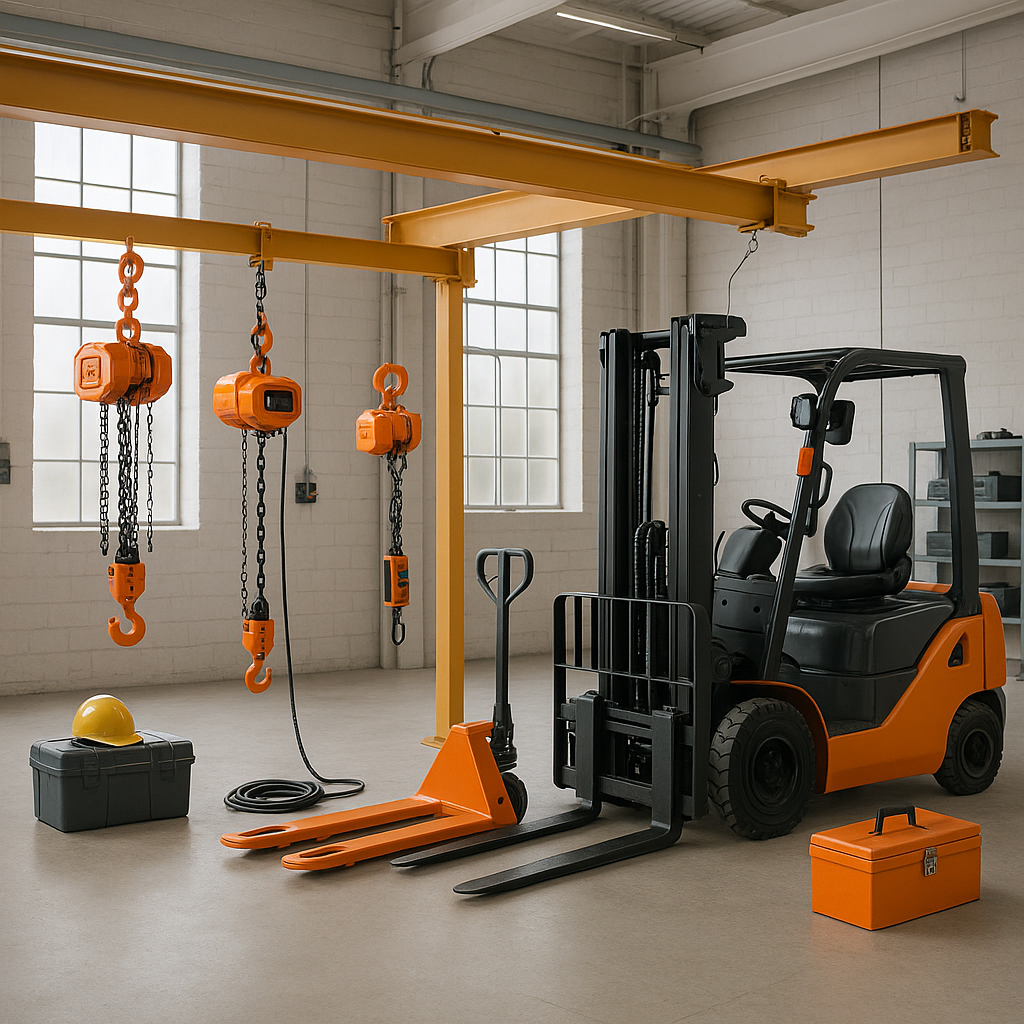
Here are some common types of lifting equipment suitable for small businesses and trades in Dorset:
1. Forklifts
- Best for: Moving heavy pallets and materials over short distances.
- Considerations: Ensure you have qualified operators and that your forklift meets the weight capacity needed for your tasks.
2. Cranes
- Best for: Lifting heavy loads to significant heights.
- Considerations: Assess the space available for setup and whether you need a mobile crane or a fixed installation.
3. Hoists
- Best for: Lifting smaller loads vertically.
- Considerations: Choose between manual and electric hoists based on your lifting frequency and weight requirements.
4. Lifting Slings and Chains
- Best for: Securing loads for lifting.
- Considerations: Ensure you select slings that are rated for the specific loads you’re handling, and regularly inspect them for wear.
5. Lifting Platforms
- Best for: Providing stable access to elevated areas.
- Considerations: Assess whether you need a scissor lift for vertical lifting or a boom lift for reaching over obstacles.
How to Choose the Right Lifting Equipment
When selecting lifting equipment, keep these tips in mind:
- Check Load Ratings: Always ensure the equipment you choose can handle the maximum load you intend to lift. Refer to manufacturer specifications for safe working loads.
- Consider Ergonomics: Look for equipment that enhances operator comfort and minimizes strain, especially if used frequently.
- Safety Features: Prioritise equipment with built-in safety features, such as overload protection and emergency stop buttons.
- Training and Certification: Ensure that your team is properly trained and certified to operate the equipment safely.
Mistakes to Avoid
When investing in lifting equipment for your Dorset business, be mindful of these common pitfalls:
- Underestimating Load Requirements: Choosing equipment that cannot handle the load can lead to accidents and downtime.
- Neglecting Maintenance: Regular maintenance is essential to ensure equipment remains safe and functional. Create a maintenance schedule and adhere to it.
- Ignoring Local Regulations: Familiarise yourself with health and safety regulations in the UK. Ensure that your lifting operations comply with all legal requirements.
Checklist for Selecting Lifting Equipment
To streamline your selection process, consider this checklist:
- [ ] Define your lifting needs (load type, weight, height).
- [ ] Research available lifting equipment options.
- [ ] Evaluate equipment based on safety features and load ratings.
- [ ] Consider operator training requirements and maintenance needs.
- [ ] Consult with suppliers regarding your specific applications.
Questions to Ask Your Supplier
When approaching suppliers for lifting equipment, asking the right questions can ensure you make an informed decision:
- What is the maximum load capacity of this equipment?
- Are there any additional safety features included?
- What training do you provide for operators?
- What is the warranty or guarantee offered with the equipment?
- Can you recommend maintenance practices or services?
Conclusion
Choosing the appropriate lifting equipment is a critical decision for any small business or trade in Dorset. By understanding your specific needs, evaluating your options, and consulting with knowledgeable suppliers, you can ensure that your lifting operations are safe, efficient, and compliant with industry standards. For further assistance or to explore our range of lifting equipment, visit our lifting equipment page.
Taking the time to make informed decisions will not only enhance your operational efficiency but will also contribute to a safer work environment for you and your team.